


From Pews to Projectors: AV System Design Tips for Worship Spaces
July 20, 2026Modernizing a worship space feels risky. Add screens and suddenly the sanctuary looks like a conference room. Install speakers and they dominate the architecture you’ve cherished for decades. The tension between honoring sacred aesthetics and embracing helpful technology stops many churches from making any changes at all. But thoughtful AV system design doesn’t force a choice between tradition and clarity—it bridges them.
Preserving Sacred Space While Enhancing Experience
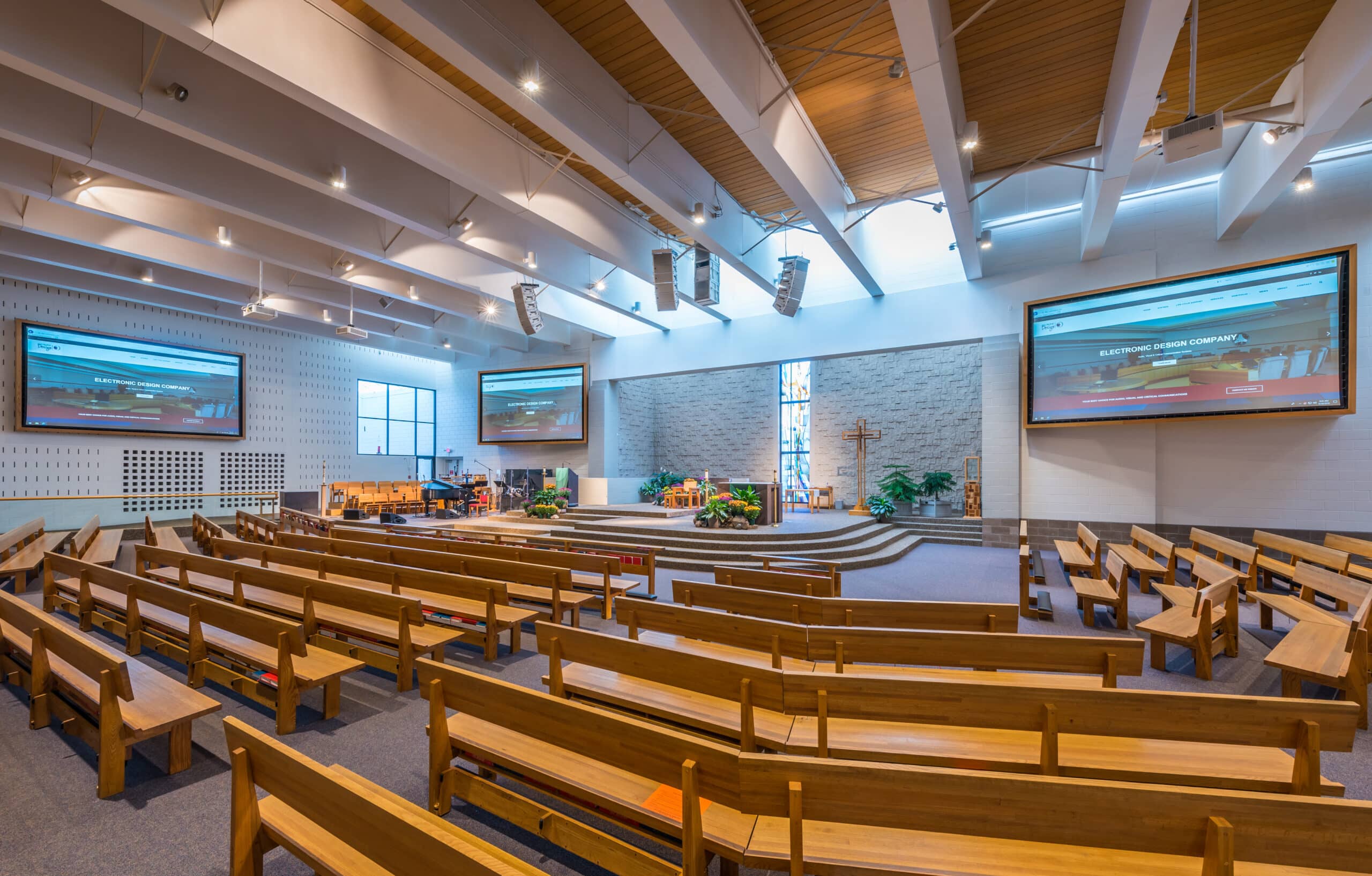
The core principle is simple: every congregant should see and hear clearly without technology becoming the focal point. That means choosing gear that blends rather than announces itself. Slim column speakers mounted on walls, PTZ cameras positioned discreetly, and screens that retract or hide behind architectural features all serve function without dominating form.
Screen placement matters enormously. Avoid blocking stained-glass windows, altar crosses, or liturgical art with projectors or displays. Mount screens above natural sightlines or in corners where they provide visibility without competing with sacred elements. When adding stage monitors for worship leaders, use floor-level or rear-mounted confidence monitors that stay invisible from the pews.
Cable management sounds mundane but makes a profound visual difference. Visible wires running across walls or draped over pews distract from worship and degrade the sacred ambiance you’re working to preserve. Use neutral colors, custom enclosures, and run cables through existing conduits whenever possible—especially in historic buildings where drilling new holes feels wrong.
Display Options That Match Your Space
Projectors remain popular because they’re budget-friendly and scalable. They work beautifully in controlled lighting—evening services or spaces with good window treatments. For naturally lit sanctuaries, high-lumen laser projectors provide better visibility. Short-throw lenses reduce shadows, and motorized retractable screens hide equipment when not in use, maintaining clean visual lines during traditional services.
LED video walls deliver high-impact brightness even in daylight-heavy rooms. With no lamps to replace and lifespans exceeding 50,000 hours, they’re nearly maintenance-free. The trade-off? Higher upfront costs and a modern aesthetic that can feel concert-like without careful framing. When done well, though, they integrate beautifully.
Large-format LCD displays (75″-98″) offer a middle ground for mid-sized sanctuaries—cost-effective, bright, and easily mounted on either side of the platform. This approach works particularly well for digital signage for churches, displaying announcements, lyrics, or scripture without overwhelming the space.
Acoustics: The Foundation You Can’t Skip
Even exceptional equipment sounds terrible in a reverberant room. Hard surfaces and high ceilings create echo and muddiness that undermine both spoken word and music. Before investing in microphones or speakers, address room acoustics.
Sermon-focused spaces typically target reverberation times (RT60) of 0.5-1.0 seconds for speech clarity. Contemporary worship with live bands works well at 0.8-1.3 seconds. Treat rear walls to reduce slap echo using fabric-wrapped panels, bass traps, and wooden diffusers. Mix absorption and diffusion carefully—over-treating can deaden a room entirely, removing the natural warmth that makes music feel alive.
Organizations like Electronic Design Company (EDC) often start worship projects with acoustic modeling before recommending equipment, ensuring that whatever gets installed actually sounds good in your specific space. This prevents the common mistake of buying excellent gear that performs poorly because room acoustics weren’t addressed first.
Bringing Your Congregation Along
Technology decisions stir emotions in faith communities. Frame upgrades as ministry tools rather than modernization for its own sake. Connect AV changes to spiritual outcomes: clearer preaching that helps people engage with scripture, deeper singing engagement, reaching homebound members through improved streaming.
Involve stakeholders early—worship leaders, tech volunteers, and tradition-minded members who need reassurance that changes honor rather than erase heritage. Demo days showing how unobtrusive equipment can be, and phased implementation starting with audio before adding visual elements, both build trust.
EDC’s proven process emphasizes this collaborative approach, bringing technology experience directly into client environments while ensuring the final solution aligns with congregational values and ministry vision.
The goal isn’t making worship spaces look modern—it’s helping them function beautifully. Thoughtful AV system design serves worship rather than distracting from it, and the right visual communication tools enhance connection without overwhelming sacred space.