


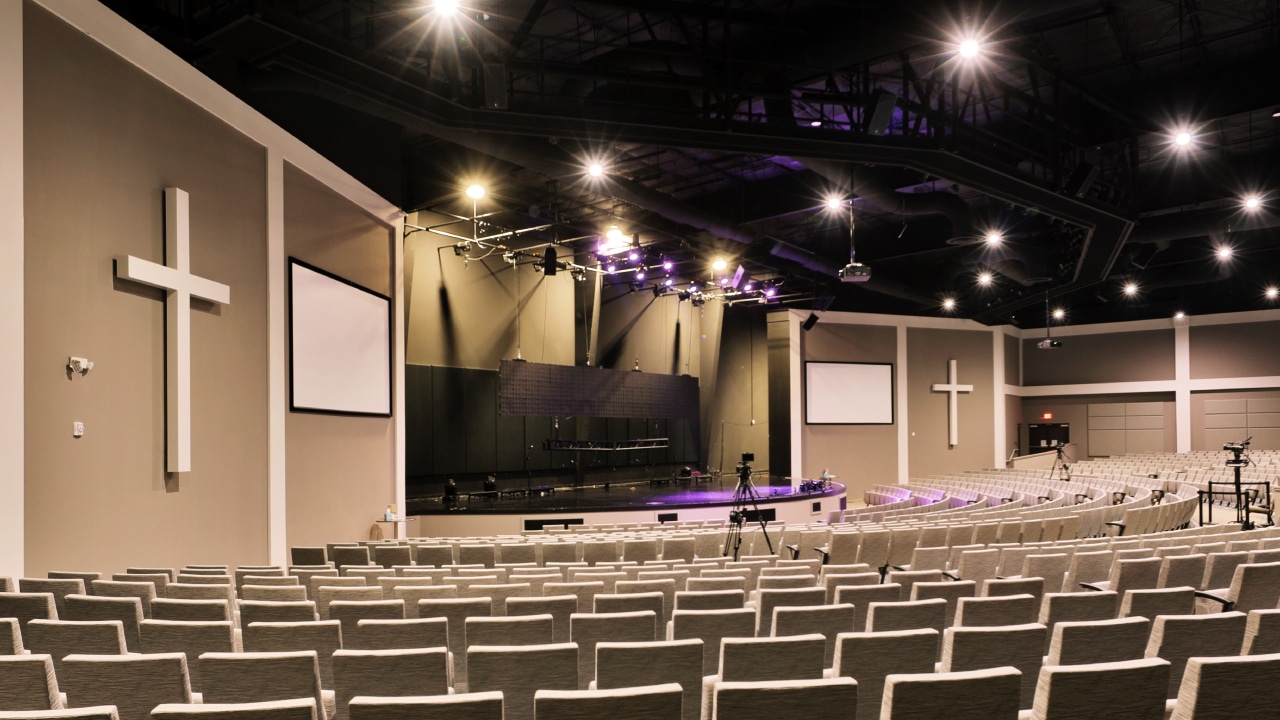
Designing a Church AV System That Elevates Worship and Live Streaming
July 6, 2026Creating a meaningful worship experience shouldn’t feel like learning broadcast engineering. Yet many church leaders find themselves overwhelmed by technical decisions, worried that the wrong choice might drain budgets or turn their sanctuary into a television studio. The good news? A well-designed church AV system enhances worship without overshadowing it.
Audio: Where Everything Begins
Clear speech is the foundation of effective church AV. When congregants can’t understand the sermon or lyrics feel muddled, even the most inspiring message loses impact. The goal is speech intelligibility—crisp, natural sound that carries clearly throughout the space.
Room acoustics matter more than expensive speakers. Bare walls, hard pews, and high ceilings create echoes and reverberation that muddy sound. Before upgrading microphones or speakers, consider acoustic treatment: panels that absorb excess sound, bass traps for low-frequency control, and diffusers that scatter sound evenly.
Speaker placement depends on your space. Larger sanctuaries benefit from line array systems that distribute sound evenly across long distances. Smaller worship spaces work well with point-source speakers positioned to minimize reflections. The key is covering the congregation without creating hot spots or dead zones.
For equipment, wireless headset or lapel microphones free speakers to move naturally. Musicians need direct-input boxes for instruments, and worship bands often require aux-fed subwoofers for clean bass that doesn’t overwhelm vocals. Drum enclosures help manage stage volume in smaller rooms.
Lighting and Camera Work That Serves Worship
Lighting isn’t about theatrics—it’s about visibility. Congregants and cameras both need even front lighting that keeps faces clear. Match color temperature around 4000-4500K for natural appearance both in-person and on-screen. Backlighting separates people from backgrounds, adding visual depth without distraction.
For camera setup, PTZ (pan-tilt-zoom) cameras offer flexibility with minimal visual intrusion. Volunteers can operate multiple cameras from a single control station, eliminating tripods in aisles and maintaining sightlines. Position cameras at eye level with the stage for natural viewing angles—typically a central wide shot paired with side-angle cameras for variety.
The visual principle throughout should be transparency. Keep technology unobtrusive with slim speakers in neutral colors, hidden cables, and equipment that blends into the sanctuary’s aesthetic. Avoid blocking sacred symbols or placing screens where they compete with altars or stained glass.
Getting Live Streaming Right
Here’s a critical mistake many churches make: sending the same audio mix to both the in-room sound system and the live stream. What works for people in pews rarely translates well online. Remote viewers miss the ambient sound of the congregation, the natural acoustics of the space, and the physical presence that makes worship tangible.
Create a dedicated stream mix. Add ambient microphones to capture congregation participation—sung responses, shared prayer moments, the authentic atmosphere that makes church live streaming equipment worth the investment. This layered approach helps online viewers feel connected rather than like they’re watching from a distance.
Organizations like Electronic Design Company (EDC) often emphasize this principle when working with worship spaces: technology should enhance connection, not just broadcast it. Starting with church live streaming equipment doesn’t require massive budgets—a well-placed camera, proper audio interface, and free software like OBS can deliver quality results when configured thoughtfully.
Technical requirements are straightforward: stable internet (5-10 Mbps upload minimum), preferably wired Ethernet, and equipment that volunteers can actually operate. Complex systems intimidate the people who’ll run them Sunday after Sunday. Prioritize presets, clear labeling, and simple workflows.
Building Thoughtfully Without Breaking the Bank
Most churches don’t need everything at once. Phased upgrades work beautifully—start with audio, then add cameras or screens as budgets allow. Install infrastructure early (conduit runs, network drops) to save long-term costs, even if you’re not using those connections immediately.
Smaller congregations have built solid streaming setups for $3,000-$10,000 by starting small: one quality camera, good lighting, and clear audio beats multiple mediocre feeds. Used or refurbished PTZ cameras, clip-on LED lights, and volunteer-run production keep costs manageable while maintaining quality.
EDC’s approach with worship spaces typically involves acoustic modeling and on-site system evaluations to identify which upgrades deliver the most ministry value first. This prevents the common pitfall of overloading on gear that looks impressive but doesn’t serve actual worship needs.
What Matters Most
Before any equipment decision, ask: “How will this improve worship or outreach?” Technology that draws attention to itself has failed. Church AV systems that work well become invisible—congregants focus on the message, not the medium. Whether you’re streaming to homebound members or reaching seekers online, the right AV integration supports ministry without overwhelming it.