


AV Technology for Your College Campus
Modern campus environments rely on integrated AV systems to support learning, communication, and connection. From lecture halls to dorms, well-designed campus technology creates consistency, clarity, and confidence for students, faculty, and IT teams alike.
Sound Reinforcement in Learning Environments
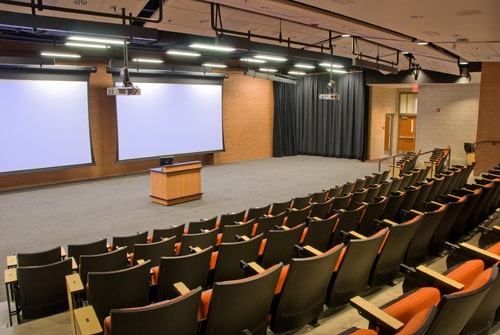
Clarity always beats loudness. In classrooms and lecture halls, sound reinforcement should deliver natural, fatigue-free audio from the microphone to every student—whether they’re in the front row or the back.
- Choose pattern-appropriate microphones, set clean gain structures, and tame low-end room rumble.
- Use zone-based audio presets to switch easily between lecture, discussion, and hybrid session formats.
Add assisted listening systems as needed, and validate with measurements. Even, intelligible coverage improves student focus and helps instructors teach at a conversational pace.

Digital Signage That Reaches the Right People, Fast
Strategic digital signage turns lobbies, corridors, and commons into an always-on messaging platform.
- Use a centralized CMS to push out weather alerts, safety updates, and real-time schedule changes.
- Promote events and guide visitors with digital displays that serve as wayfinding touchpoints.
Design content for quick legibility: large text, high contrast, and minimal clutter. Captions should accompany any motion graphics or narrated segments, and templates should be standardized across departments.

AV That Supports the Full Campus Journey
Learning extends beyond classrooms—AV should too. Use smart campus technology to create a connected, intuitive experience from dorm to dean’s office.
- Libraries, lounges, and dorms need quiet, speech-friendly audio and screens calibrated for ambient light.
- Equip faculty and admin spaces with conferencing tools that offer reliable cameras, microphones, and content sharing.
In collaborative spaces, provide table power, HDMI connections, or secure wireless presentation. In performance venues, align AV settings across the space so events feel seamless from door to seat.

User-Friendly Control, Campus-Wide
The best systems get used because they’re simple. Interfaces should make it easy for instructors, staff, and student workers to operate tech without hesitation.
- Use centralized dashboards to manage rooms, push signage, and monitor status.
- Label inputs clearly, standardize presets, and leave short guides at each station.
Train teams each semester and maintain a video library for refreshers. Monitor usage and support requests to identify needs before they interrupt instruction.
Plan for Today and Tomorrow
Design your AV infrastructure with scalability in mind. Choose interoperable components that grow with your facilities and programs.
- Avoid siloed tech by standardizing audio, video, and control across campus environments.
- Phase upgrades around academic calendars, reuse viable equipment, and document every setting for repeatability.
Leverage AV over IP, PoE where practical, and secure VLANs for performance and security. Include redundancy for lecture capture and emergency communications. These standards reduce long-term maintenance and speed up deployment.
Build a Campus That Communicates with Clarity
AV technology is the backbone of a connected campus experience. Done well, it supports teaching, research, and community life without calling attention to itself. If you are ready to evaluate lecture hall audio, unify your digital display network, or refresh classroom technology integration, EDC can help you move from piecemeal fixes to a clear campus plan.
Explore our education solutions to see how we approach higher education AV, then Every decision should be grounded in measured performance, faculty workflow, and student outcomes, so investments serve teaching today and scale as programs, buildings, and campus enrollment evolve together.
Then start a conversation with our team to map the right next steps for your campus.